Garage Door Won’t Open? The Complete Diagnostic Guide
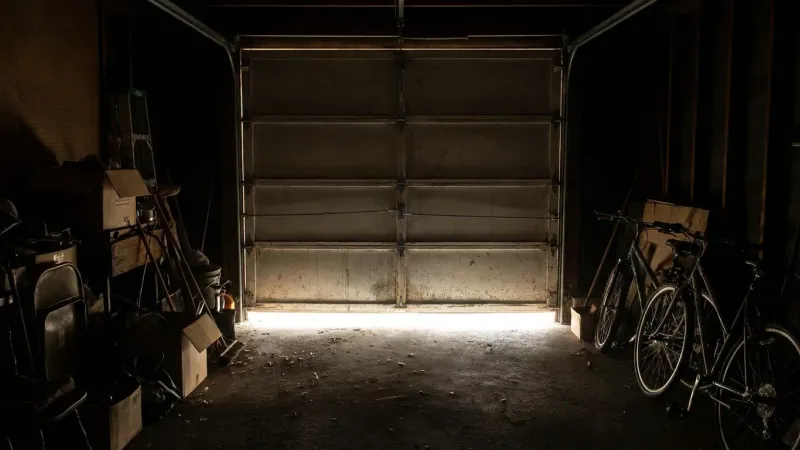
It is the definition of a bad morning: You are late for work, your kids are in the car, you press the remote button, and your garage door refuses to open. The motor might hum angrily, or there might be complete, agonizing silence, but the heavy steel door remains bolted to the concrete.
Before you panic or attempt to force the door upward (which can cause thousands of dollars in structural damage), take a step back.
At Ez2Fix, our emergency dispatch handles “stuck door” calls across Northern New Jersey every single day. The root cause usually falls into one of five categories, ranging from a $5 battery swap to a highly dangerous torsion spring fracture. Here is how our technicians diagnose a garage door that refuses to open, and how you can do the same.
1. Dead Transmitter Batteries (The Silent Failure)
The Symptom: You press your car remote, and absolutely nothing happens. No motor noise, no clicks, no flashing lights. However, when you walk inside the garage and press the main wall console, the door opens flawlessly.
The Diagnosis: The most basic failure is often the most common. The 3-volt or 12-volt battery powering your remote’s radio frequency transmitter has died.
The Fix: Use a flathead screwdriver or the visor clip to pop the plastic housing of your remote open. Most modern LiftMaster and Chamberlain remotes use a flat CR2032 lithium coin battery, while older models and Genie remotes may use a small A23 12V alkaline battery. A quick trip to the pharmacy will resolve your issue.
2. A Catastrophic Torsion Spring Fracture
The Symptom: You press the button, and the motor groans in extreme distress but the door only moves an inch before stopping. The emergency release cord is incredibly hard to pull. If you were home earlier, you may have heard a violent “bang” from the garage that sounded like a gunshot.
The Diagnosis: Look at the heavy-duty metal coil (the torsion spring) mounted on the steel bar horizontally above your closed door. If you see a stark, two-inch gap splitting the coil in half, your spring has snapped.
Garage doors weigh between 150 and 400 pounds. The electric motor does not actually lift that weight; the torsion spring counter-balances it. When the spring snaps, the motor is tasked with lifting 300 pounds of dead weight, which triggers its internal overload protector.
The Fix: STOP IMMEDIATELY. Do not touch the spring, do not pull the red emergency cord, and do not attempt to lift the door manually unless it is an absolute emergency (it will require two strong adults). Torsion springs hold immense, lethal torque. Call an Ez2Fix professional immediately for an emergency spring replacement.
3. The Auto-Lock or Manual Slide Lock is Engaged
The Symptom: The motor tries to lift the door but gets caught instantly. The door may bind or shudder violently on one side.
The Diagnosis: Many doors are equipped with a manual, physical interior slide-bolt lock (often used when homeowners go on vacation). If this lock was inadvertently thrown—often by curious children playing in the garage—it pins the door directly into the vertical track. The motor is literally fighting a steel bolt.
The Fix: Disconnect power to the motor so no one accidentally presses the button. Locate the slide lock on the interior face of the door panel (usually near the edge). Slide the bolt back into the open “unlocked” position.
4. The Trolley Carriage is Disconnected
The Symptom: You press the remote, the motor runs beautifully, and you can see the chain or belt traveling along the ceiling rail, but the door just sits there.
The Diagnosis: The carriage (which physically connects the top of the door to the moving chain/belt) has been disconnected. This happens if the red emergency release cord was pulled recently, or if the carriage clip broke.
The Fix: Pull the red emergency release handle straight back toward the motor unit (you should feel it “click” into the engaged position). Then, manually lift the door a few feet, or press your remote. The moving trolley will slide along the rail until it violently snaps back into the carriage, reconnecting the door.
5. Stripped Logic Boards or Electrical Surges
The Symptom: Utter silence. The wall button does nothing, the remotes do nothing. The outlet the motor is plugged into has power, but the motor appears completely dead.
The Diagnosis: This is common after severe summer thunderstorms in New Jersey. A power surge has traveled through the electrical system and fried the sensitive computer logic board inside the opener housing.
The Fix: If the opener is relatively new (under 5 years old), a technician can order and install a replacement logic board. However, if the motor is older than 10 years, replacing the entire unit with a modern, surge-protected LiftMaster is technically and financially the smarter route.
When to Stop Guessing and Call the Pros
If you have verified that your remotes have fresh batteries, the door is physically unlocked, and the opener has power, you are likely dealing with a severe mechanical failure like a snapped spring or a stripped motor gear.
Continuing to run the motor when the door is structurally compromised will easily burn out the logic board or snap the lift cables, turning a $300 repair into a $900 nightmare.
At Ez2Fix, our trucks are mobile warehouses. We stock high-cycle torsion springs, fresh LiftMaster motors, and heavy-duty hardware to fix your jammed door on the very first visit.
Stuck in your garage? Call Ez2Fix at (201) 554-6769 for rapid-response emergency service anywhere in Northern New Jersey, or book your repair assessment online.