
How to Fix a Noisy Garage Door: The Ultimate Diagnostic Guide
A garage door is the largest moving mechanical system in your home. When working properly, it should open and close with a smooth, heavy glide.
But when things go wrong, a noisy garage door isn’t just an annoyance that wakes up the neighborhood—it is an audible warning. Rattling, shrieking, and grinding are the sounds of metal-on-metal friction accelerating. If you ignore the noise, you are allowing premature wear that will inevitably result in a snapped spring or a shattered motor gear.
At Ez2Fix, “My garage door is incredibly loud” is one of our most frequent non-emergency service calls across Northern New Jersey. Fortunately, quieting your door is often straightforward. Here is our diagnostic guide to identifying the noise, fixing what you can, and knowing when to call a professional.
1. The Scream (Dry or Worn Rollers)
The Noise: A high-pitched squeal or screeching fingernails-on-a-chalkboard sound as the door travels up the tracks.
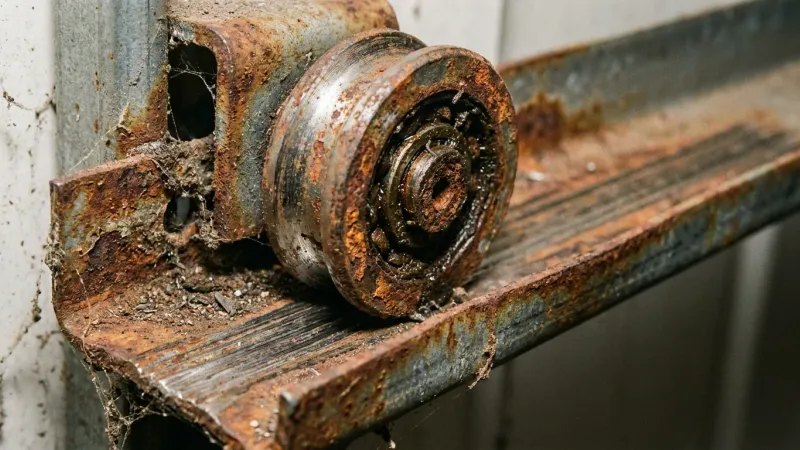
The Diagnosis: This is the sound of dry, rusted, or degraded metal rollers violently dragging against the steel track, rather than smoothly turning.
The DIY Fix: If the rollers are intact but simply dry, you must lubricate them. Do not use WD-40. Standard WD-40 is a solvent that strips away existing grease and aggressively attracts dirt, turning into a sticky paste. Instead, buy a can of lithium-based grease or specialized silicone garage door spray. Carefully spray the center ball bearings of each roller. Do not spray the flat tracks themselves; tracks should be wiped clean with a dry cloth.
The Pro Upgrade: If your metal rollers are wobbling, crooked, or over 10 years old, lubrication won’t save them. Have a professional install sealed nylon rollers with 13-ball bearings. This single upgrade will reduce the noise of your entire door by up to 75%.
2. The Clanking Rattle (Loose Hardware)
The Noise: A loud, metallic rattling or vibration that shudders through the entire door panel as it moves.
The Diagnosis: Your garage door opens and closes thousands of times a year. This relentless vibration slowly rattles the nuts and bolts loose on the hinges and the track brackets holding the system to your wall.
The DIY Fix: Grab a socket wrench and execute a full hardware sweep. Systematically tighten the bolts on every single hinge, roller bracket, and the lag screws holding the vertical tracks to the wooden wall framing. Warning: Do not overtighten and strip the thin metal on the door panels, and never unscrew the bottom bracket on the door (it is under extreme spring tension).
3. The Metallic Grind (Dry Springs and Hinges)
The Noise: A deep, straining groan or a grinding metallic sound as the door crests the curve of the top track.
The Diagnosis: The heavy-duty steel torsion spring mounted above your door is composed of tightly wound metal coils. As it winds and unwinds to lift the door, those coils rub against one another. If they run dry, they grind violently. Similarly, the hinges between your door panels can bind if they lack lubrication.
The DIY Fix: Generously coat the entire torsion spring with your silicone spray until it is saturated. Then, spray a quick burst directly into the pivot points of the metal hinges connecting your door panels. Open and close the door twice to spread the lubricant evenly.
4. The Slapping Bang (A Loose Chain Drive)
The Noise: A violent slapping or clanking sound originating from the ceiling motor, rather than the door itself.
The Diagnosis: If you have a traditional chain-drive garage door opener, the metal chain stretches over years of heavy pulling. If the chain becomes too loose, it will visibly bounce and slap aggressively against the metal rail as the motor runs.
The DIY Fix: Consult your opener’s manual to find the exact tensioning procedure. Generally, there is a prominent adjusting nut above the door near the carriage. Tighten the nut until the chain sits exactly half an inch above the base of the rail. Do not overtighten, or you will snap the internal gear sprocket.
Still Noisy? When to Call Ez2Fix
If you have systematically tightened the hardware and heavily lubricated the hinges, rollers, and springs, but the door still sounds like a freight train, you have reached the limits of DIY maintenance.
You are likely dealing with one of two advanced structural failures:
- Failing Motor Bearings: The internal gears or bearings inside your electric opener are grinding to dust and the unit requires replacement.
- Severe Track Misalignment: The tracks are no longer perfectly parallel, forcing the door to bind and twist aggressively as it lifts. This puts extreme stress on the motor and requires a laser-calibrated track realignment by a professional.
At Ez2Fix, we deploy a comprehensive “Tune-Up & Silence” service across Northern NJ. We will tighten your hardware, perform a commercial-grade lubrication sweep, perfectly balance your torsion springs, and pinpoint the exact source of your noise to restore peace to your home.
Ready for a quiet house? Call Ez2Fix at (201) 554-6769 to schedule a professional diagnostic anywhere in Northern New Jersey, or Request a Free Estimate.