
How to Diagnose and Repair a Broken Garage Door Spring
Last updated: January 15, 2025 | 8 min read
A broken garage door spring is one of the most common garage door problems homeowners face in Northern New Jersey. In this comprehensive guide, we’ll walk you through diagnosing a broken spring, understanding safety risks, and deciding whether to tackle the repair yourself or call professionals.
Signs Your Garage Door Spring is Broken
How do you know if your garage door spring is broken? Here are the most common signs:
-
Door Won’t Open - The most obvious sign. If your garage door opener runs but the door doesn’t move more than a few inches, a broken spring is likely the culprit.
-
Loud Bang - Garage door springs store immense tension. When they break, they make a loud “gunshot” sound that can wake you at night.
-
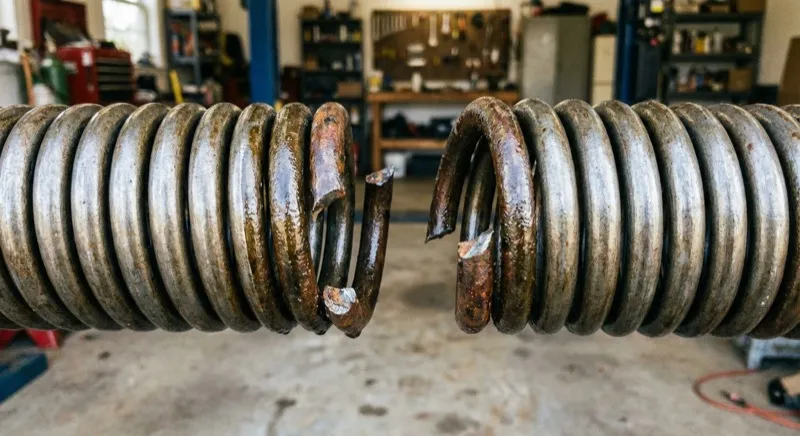
Visible Gap in Torsion Spring - If you have torsion springs (mounted above the door), look for a 2-3 inch gap in the spring coils.
-
Door Opens Crooked - For extension springs (on sides), one broken spring causes the door to lift unevenly.
-
Door Feels Heavy - A spring-less garage door weighs 150-300 pounds. If it feels extremely heavy when lifting manually, springs may be broken.
-
Opener Motor Strains - The opener motor runs but makes grinding noises and can’t lift the door.
Torsion Springs vs Extension Springs
Understanding what type of springs you have is critical before attempting any repair.
Torsion Springs
Location: Mounted horizontally above the garage door opening
How they work: Wind and unwind to lift/lower the door
Lifespan: 10,000-20,000 cycles (5-7 years with normal use)
Difficulty to replace: VERY DIFFICULT - requires specialized tools and is extremely dangerous
Pros:
- More durable and longer-lasting
- Smoother, quieter operation
- Fewer break-related accidents
Cons:
- More expensive to replace ($150-$300 professional installation)
- Very dangerous to replace DIY
Extension Springs
Location: Mounted on the sides of the door above the horizontal tracks
How they work: Stretch and contract as door moves
Lifespan: 7,000-12,000 cycles (4-6 years)
Difficulty to replace: DIFFICULT - still dangerous but slightly easier than torsion
Pros:
- Less expensive ($50-$120 per spring)
- Slightly safer for DIY (with proper safety cables)
Cons:
- Break more frequently
- Can cause more damage when they break
- Noisier operation
Safety Risks of DIY Spring Repair
⚠️ WARNING: We strongly recommend hiring a licensed professional for spring replacement.
Here’s why:
Extreme Tension
- A single torsion spring can exert 200-300 pounds of force
- When improperly handled, springs can cause:
- Broken fingers or hands
- Facial injuries
- Severe lacerations
- Loss of eyesight
- Death (rare but documented)
Special Tools Required
- Winding bars (not screwdrivers!)
- C-clamps
- Wrenches
- Ladder
- Safety glasses
- Gloves
Common DIY Mistakes
- Using wrong size replacement spring (causes premature failure)
- Under-winding or over-winding
- Not securing door during replacement
- Releasing tension too quickly
- Not installing safety cables on extension springs
Emergency rooms in Northern NJ treat dozens of garage door spring injuries every year. Don’t become a statistic.
Step-by-Step Diagnosis Process
If you want to diagnose the problem before calling a professional, here’s a safe process:
Step 1: Disconnect the Opener
- Pull the red emergency release cord
- Manually try to lift the door about 3-4 feet
- Let go - does it stay in place or fall?
If it falls: Springs are definitely broken or severely worn
Step 2: Visual Inspection
For Torsion Springs:
- Look above the door for the spring(s)
- Check for a visible gap (2-3 inches) in the coils
- Look for rust or corrosion
- Check if spring looks stretched or deformed
For Extension Springs:
- Look on both sides above the door tracks
- Check if one side looks slack
- Inspect for breaks or separation
- Verify safety cables are present
Step 3: Count Remaining Cycles
If springs aren’t broken yet but you’re concerned about lifespan:
Average use: 4 cycles per day = 1,460 cycles/year
10,000-cycle spring: Lasts ~6-7 years
Know your door’s age? Multiply years × 1,460 = approximate cycles used
When to Call a Professional
Call a licensed garage door technician if:
- ✅ Torsion spring is broken (DO NOT DIY)
- ✅ Extension spring is broken and you’re not 100% confident
- ✅ You don’t have the specialized tools
- ✅ You value your safety and time
- ✅ The door is double-wide or oversized
- ✅ Springs are custom or hard-to-find sizes
Benefits of Professional Repair
Average DIY time: 3-6 hours (if everything goes right)
Professional time: 45 minutes to 1.5 hours
Professional cost: $150-$350 (parts + labor)
DIY hospital visit: $5,000-$50,000+ (seriously, it happens)
What you get with a pro:
- Correct spring tension calibration
- Proper cable adjustment
- Full door balance testing
- Safety inspection of all components
- Warranty on parts and labor
- Zero risk of injury
Garage Door Spring Repair in Northern NJ
At Ez2Fix, broken springs are our most common repair across Bergen, Essex, Hudson, Morris, and Passaic counties. Here’s what sets us apart:
- Same-Day Service: Same-day spring repair available throughout Northern NJ
- Upfront Pricing: No hidden fees - you know the cost before we start
- 90-Day Warranty: Parts and labor covered on every spring replacement
- Licensed & Insured: NJ Contractor #13VH13553300
- Quality Parts: We use only commercial-grade springs from Clopay, Wayne Dalton, and Amarr
Serving: Newark, Jersey City, Paterson, Elizabeth, Clifton, Hackensack, and 70+ Northern NJ cities
Conclusion
While it’s possible to diagnose a broken garage door spring yourself, replacement is inherently dangerous and ideally left to licensed professionals. The risks of injury far outweigh the cost savings of DIY repair.
If you’re in Northern New Jersey and need garage door spring repair, call Ez2Fix at (201) 554-6769. We offer same-day service, upfront pricing, and a 90-day warranty on parts and labor for every spring replacement.
About Ez2Fix: Licensed garage door professionals serving Northern NJ since 2014, with a 5.0★ Google rating.
Related Articles: