If your garage is attached to your house, it’s likely the biggest source of heat loss in your home. A thin, uninsulated metal garage door acts like a giant heat exchanger, letting cold in during winter and heat in during summer.
Benefits of Insulation
- Lower Energy Bills: By keeping the garage temperature more stable, you reduce the load on your HVAC system, especially if you have rooms above the garage.
- Durability: Insulated doors (often “sandwich” construction with steel-foam-steel) are much stronger and less prone to denting than single-layer steel doors.
- Quieter Operation: The foam core dampens vibration, making the door significantly quieter when opening and closing.
- Comfort: If you use your garage as a workshop or gym, insulation makes it usable year-round.
DIY Kits vs. New Door
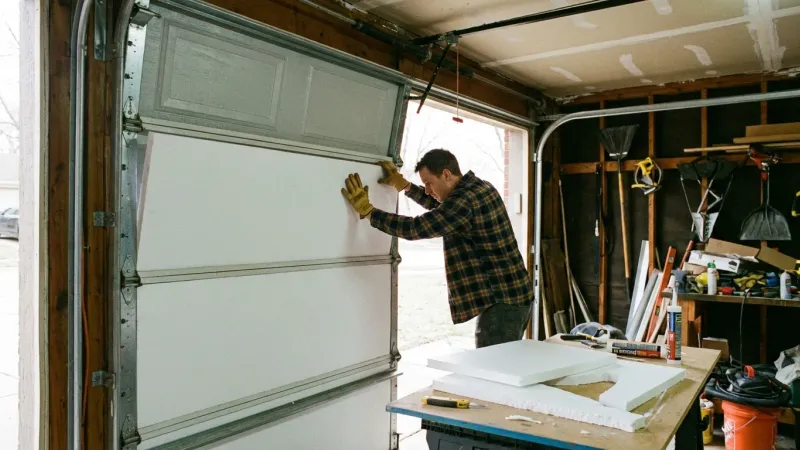
- DIY Kits: You can buy foam panel kits to glue onto your existing door. They help a little, but they add weight (which might require spring adjustment) and don’t seal as well as a factory door.
- New Insulated Door: The best option. Factory-insulated doors have higher R-values (thermal resistance) and better seals between sections.
R-Value Matters
Look for an R-value of at least R-12 for attached garages in New Jersey. The higher the number, the better the insulation.
Related Resources
- Insulated vs Uninsulated Doors - Compare your options when shopping for a new door
- Weatherstripping Replacement - Seal gaps to maximize your insulation’s effectiveness
- Choosing a New Garage Door - Full buying guide including insulation considerations
- Noisy Garage Door Fixes - Insulation also reduces noise
Upgrade Services: Door Installation • Panel Replacement
Service available in: Fair Lawn • Cedar Grove • Little Falls • All areas
Ready to schedule? Get a free estimate or call (201) 554-6769.