
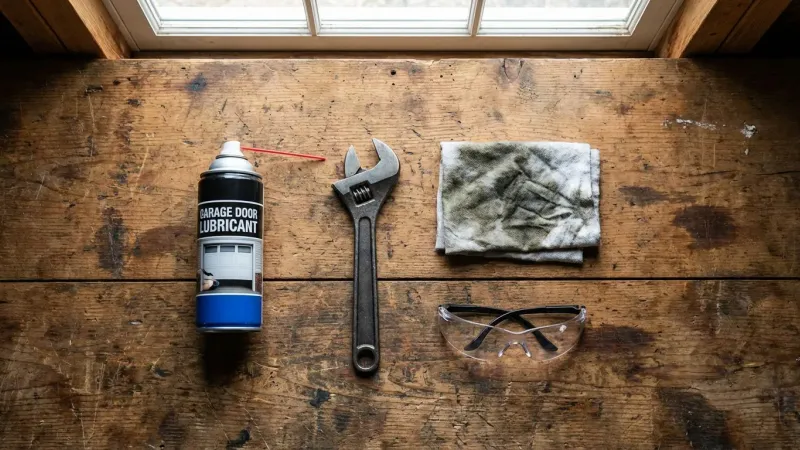
Quick answer: Inspect and service your garage door at least twice a year — once in spring, once in fall. Lubricate the springs, rollers, and hinges (never the tracks), test the door’s balance and safety reverse, and replace worn weatherstripping. In Northern NJ, add a cold-weather check before winter and a heat check in summer.
Your garage door is the largest moving part of your home. Like any mechanical system, it needs regular maintenance to run reliably. In Northern New Jersey — where temperatures swing from 90°F+ summers to below-freezing winters — seasonal care is especially important.
Why Seasonal Maintenance Matters
- Prevents costly breakdowns — a small tune-up beats an 11 PM emergency repair.
- Extends door lifespan — well-maintained doors last 20+ years.
- Improves safety — catch worn cables and springs before they snap under tension.
- Protects your warranty — many warranties require documented maintenance.
Spring (March – May)
After a harsh NJ winter, refresh and inspect:
- Inspect springs — look for rust, gaps, or stretching.
- Lubricate moving parts — hinges, rollers, and springs (silicone or lithium grease).
- Test balance — disconnect the opener and lift the door manually; it should stay put at waist height.
- Check weatherstripping — replace if cracked or brittle.
- Clean the tracks — wipe debris with a damp cloth.
Summer (June – August)
Heat and humidity stress the system:
- Check for warping — wood doors especially can warp in heat.
- Inspect seals — hot pavement degrades bottom seals faster.
- Clean & align the photo-eye sensors.
- Re-lubricate — high heat dries out lubricant sooner.
- Listen to the opener motor — unusual sounds can signal overheating.
Fall (September – November)
Prep for the cold ahead:
- Inspect and replace weatherstripping — critical for keeping cold air out.
- Consider insulation — if your garage stays cold, an insulated door or upgrade helps.
- Lubricate before the freeze — cold hardens lubricants.
- Test the battery backup — outages are more common in winter.
- Clear leaves from the tracks and inspect cables for fraying or rust.
Winter (December – February)
Cold is the hardest season on a garage door:
- Watch spring performance — cold metal is more brittle and prone to breaking.
- Clear ice and snow from under the door.
- Keep tracks clear of salt and debris.
- Use a cold-rated lubricant — standard ones can freeze.
- Never force a frozen door — if it won’t open, call a pro.
The 4 Tests Worth Doing Every Visit
- Balance test: disconnect the opener and lift the door by hand — it should rise smoothly and hold at waist height. If it slams down or won’t stay, the springs are out of balance.
- Safety-reverse test: lay a flat 2×4 on the floor in the center of the opening and close the door. It must reverse the moment it touches the wood.
- Photo-eye test: wave a broom handle across the sensors while the door closes — it should reverse immediately.
- Lubrication rule: spray the springs, roller bearings, and hinge pivots — but never the tracks. Just wipe the tracks clean with a rag.
When to Call a Pro
If you find broken springs, frayed cables, or the door fails the balance or safety tests, don’t DIY it — a garage door under spring tension can cause serious injury. A professional Ez2Fix tune-up includes a full multi-point inspection, lubrication of all moving parts, balance and alignment adjustment, safety-system testing, and a written condition report.
Ready to schedule? Get a free estimate or call (201) 554-6769 — we serve homeowners throughout Northern New Jersey.
Related Resources
- Extending Spring Life — lubrication tips to maximize spring lifespan
- Garage Door Balance Test — a deeper guide to testing door balance
- Weatherstripping Replacement — replace worn seals for better insulation
Maintenance services: Garage Door Maintenance • Spring Repair • Emergency Repair
Serving: Little Falls • West Caldwell • North Caldwell • all Northern NJ areas